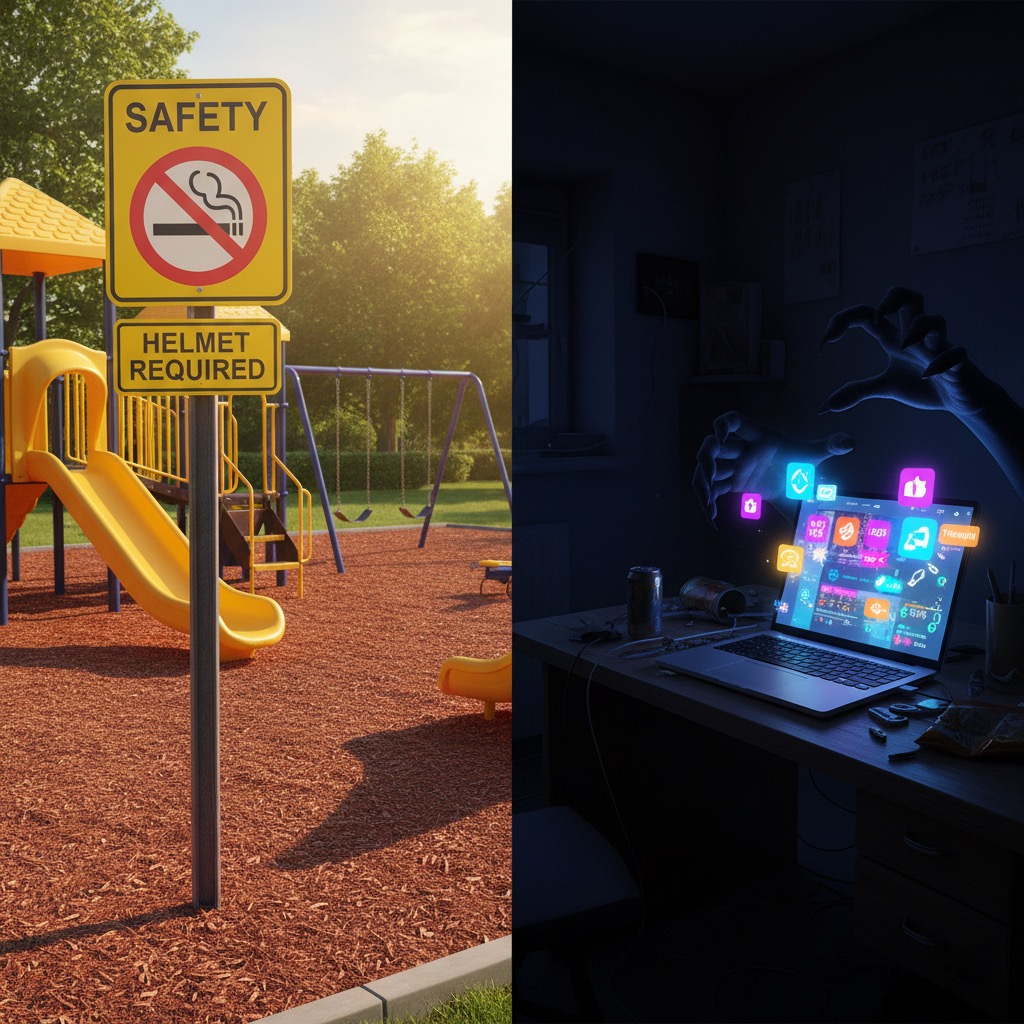
Brazil has just taken a massive leap in digital sovereignty. As of March 17, 2026, the ECA Digital (Law 15.211/2025) is officially in effect. While my international friends might know Brazil for its vibrant culture, samba, and beautiful beaches, they might not realize that we just implemented some of the world’s strictest protections for minors online.
Table of Contents
- What is the ECA Digital?
- 5 Game Changing Shifts
- The Elephant in the Room: Age Verification
- Is Social Media the “New Tobacco”?
- A Global Movement, Not Just Brazil
- Why “Felca”?
- Final Thoughts
What is the ECA Digital?
For decades, the Estatuto da Criança e do Adolescente (ECA) has been the gold standard for children’s rights in the physical world. The “ECA Digital” (or “Lei Felca”) extends those protections to the internet, targeting social media, gaming, and streaming platforms.
5 Game Changing Shifts
The ECA promotes several changes that are promised to disrupt the way tech companies operate in Brazil, specifically affecting algorithms and user verification. In summary, they include:
-
The End of “Self-Declaration”: The days of simply clicking “I am 18” are over. Platforms must now implement “reliable and auditable” age verification.
-
Banning the “Addiction Engine”: Features like infinite scroll and autoplay must be disabled by default for minors (TikTok, Instagram, beware).
-
No More Loot Boxes: Taking a hard stance on digital gambling, the law bans “reward boxes” in games accessible to children.
-
Advertising & Profiling: It is now illegal to use behavioral profiling or emotional analysis to target ads to minors. This is a big blow on the revenue streams of social media platforms and how their algorithms work.
-
The “Safety by Design” Mandate: Platforms are now legally responsible for preventing compulsive use.
The Elephant in the Room: Age Verification
All seems great at first look, but there’s an elephant in the room called “Age Verification.”
To my American friends, the idea of “uploading an ID” to use a social network sounds like a privacy nightmare. In the US, you are used to flashing an ID to buy a beer or enter a club. It’s a physical transaction where someone looks at the card; confirms you’re of age, and you move on. No data is stored.
The digital world is different. Verification often involves uploading documents or biometric data to a server, algorithms or in some instances, having a real person sitting across the world verifying an image of your documents. Critics fear we are building a surveillance nightmare where every click is tied to a government ID, and with AI, all your moves can be monitored and analyzed in real time. From what I see, Brazilians are split: while parents are relieved to have tools to protect kids from predatory algorithms, privacy advocates fear the end of online anonymity.
Is Social Media the “New Tobacco”?
Think back to the history of smoking. It took decades for society to move from “smoking is cool” to recognizing it as a public health crisis. We eventually implemented age-gating, banned TV commercials, and forced “Safety by Design” through warning labels.
Are we at that same “Surgeon General” moment with social media? We spent a century perfecting protections for kids in the real world: car seats, school safety, playgrounds with rubber floors, and age-restricted sales. However, we’ve allowed them to wander into a digital world designed to be addictive. In Brazil, they are starting to treat the isolation, polarization, and developmental damage caused by unregulated social media as a public health issue. As destructive as any physical toxin.
A Global Movement, Not Just Brazil
What Brazil is doing is not in isolation, but part of a massive global wave of “Age Gating”. Australia and UK recently passed laws that try to accomplish similar results:
-
Australia: Recently passed a landmark ban for children under 16, putting the burden entirely on platforms to “take reasonable steps” to keep kids out.
-
United Kingdom: The Online Safety Act is now in full force, requiring “highly effective” age assurance for any site with “priority harmful content.”
The difference is, while Australia focused on an outright ban, Brazil’s law is more about regulation, trying to make the internet safer for those who are allowed to be there, while strictly blocking the most harmful corners.
Why “Felca”?
The law is nicknamed “Lei Felca” after a famous Brazilian YouTuber. He made a series of videos exposing how minors were being exploited on the internet. This created an enormous commotion in Brazil and the reaction of the media forced Congress to move.
The public reaction in Brazil, however, has been very polarized (as everything nowadays). Part of the population supports the law and sees this as a “seatbelt moment” for the internet, while skeptics and tech enthusiasts fear larger consequences: data exposure and leaks, no more privacy, and the end of the “social nature” of the internet.
Final Thoughts
Is this the future of the internet, or is it government overreach? One thing is certain: the era of “move fast and break things” is over for tech giants in Brazil. Brazil realized that we can’t afford to leave our children’s development in the hands of an unregulated algorithm.
What do you think? Would you trade a bit of your digital anonymity for a safer environment for the next generation? Let’s discuss in the comments.